Disneyland for Crime
Many Turkish barbershops in Britain are a facade for money laundering from drug trafficking, human trafficking and other criminal activity
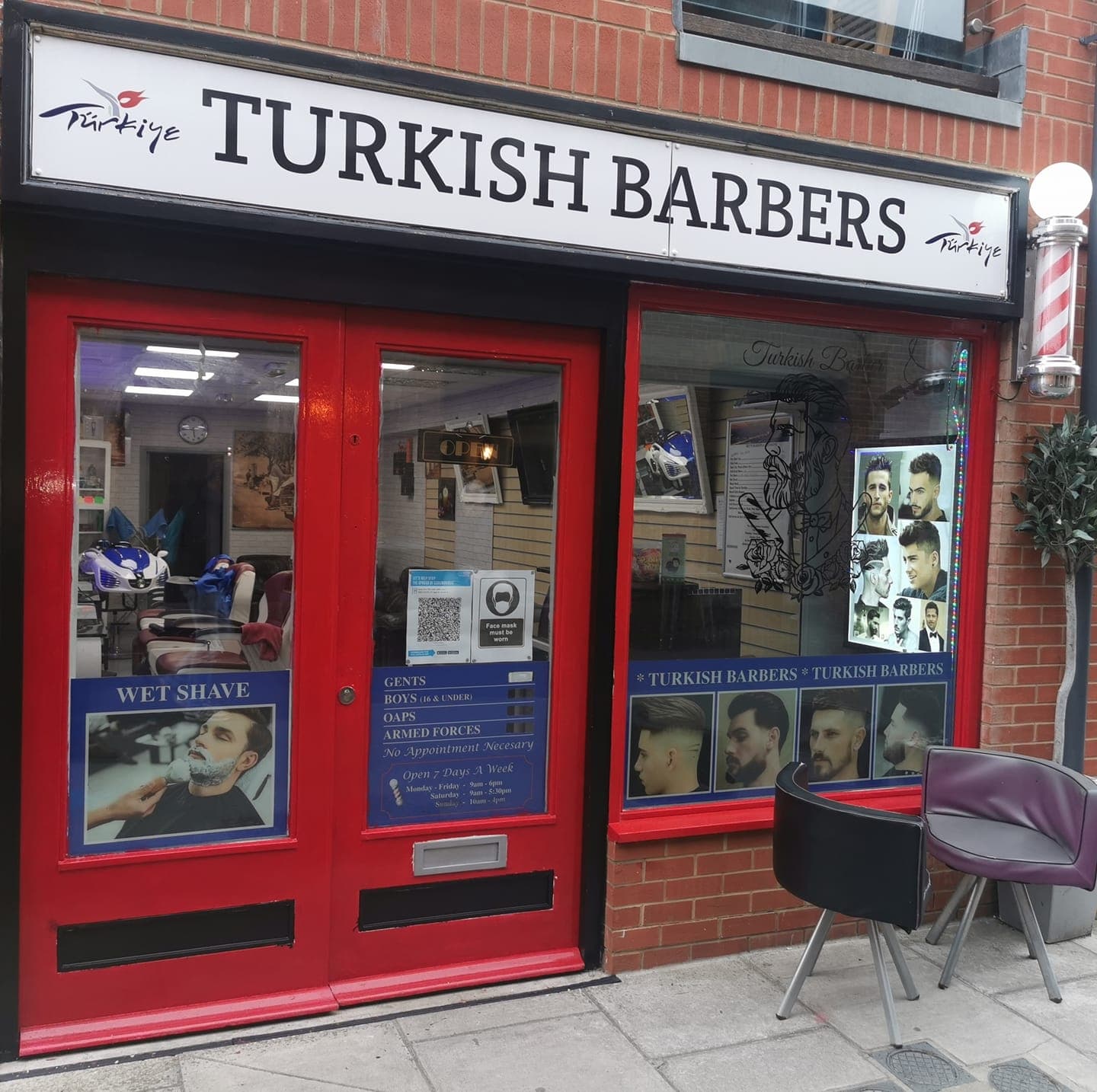

I'm sure we've all thought at least once while walking through our neighborhood in London "Hmm... there used to be three barbershops here, and now there are eight... where are the customers??"
Once I popped into such a barbershop nearby - I want to pay and they say "we only take cash." And all I have in my pocket is my phone. There was a moment of realization that I owe £20 to a group of Middle Eastern guys. We sorted it out by me transferring money to someone's private account. London. 2025.
Today The Telegraph published an investigation about what everyone has understood for a long time - Turkish barbershops in Britain are often a front for money laundering.
The number of barbershops in the country has grown from 18,000 to 30,000 over the last decade. At the same time, women's salons have decreased. What's this? Did men suddenly fall in love with haircuts?
For example, the town of Porth in South Wales with a population of less than 6,000 has 14 barbershops. That's one barbershop for every 426 residents. Including infants, women and bald grandpas. Let's assume all men get haircuts once a month - not extravagant... but they somehow keep operating. And even get renovated every few months because that's another way to launder money through inflated invoices from "network builders."
The scheme is as follows - you rent an empty premises on the high street (due to decline in many English towns there are plenty of these now), buy a few chairs, scissors and hot towels and cut 2-3 clients a day for £14-20. The rest of the "income" you generate from drug sales, human trafficking or migrant smuggling. You mix clean and dirty money, deposit it in the bank - profit
During a raid in Haverhill (a town of 27,000 people), police found in one barbershop £1,000 cash in the trunk of an Audi A4, which they kept for change. In another - makeshift living quarters in the attic with mattresses, garbage and signs of worker exploitation. In the basement of a third - an unfinished cannabis farm.
But the funniest thing is the story of a guy who traveled 58 miles from Tottenham to Haverhill "for work" at a barbershop. Does anyone really believe this is economically justified? This is worth reading in the original.
By the way, most of these "Turkish" barbershops have nothing to do with Turkey. Albanians, Iraqi Kurds, Iranians work there - anyone really, and "Turkish" is just marketing, an association with hot towels, ear wax and neck massage. A brand that sells not only haircuts but also legitimacy.
Meanwhile, real barbershops are suffering - an Albanian who opened a barbershop in Finchley after eight years of working in the area says "If I open a new shop in another area, people will think it's another money laundering business."
Because everyone understands everything.
Police launched Operation Machinize - raids on barbershops across the country, during which they froze over a million pounds in bank accounts in just one month, arrested 35 people in April, found two cannabis farms and seized tens of thousands of illegal cigarettes and vapes.
But while police close one barbershop, two others open, like fighting a hydra - you cut off one head and two grow back, only with hot towels.
Because cash operations are the perfect cover. Nobody looks suspiciously when you walk into a barbershop and give £20. Is it payment for a haircut, or money from cocaine sales - who knows. And to prove that a barbershop is a front for crime, police need to sit outside the shop and count customers.
Another Iranian Kurd who came to Britain in 2016 as a refugee opened a barbershop in London. In reality, he ran a network that smuggled 10,000 people into Britain on boats across the English Channel. He was sentenced to 11 years.
So next time you pass by a barbershop where there are never any customers but it's open... you can buy substances there. Well... or it's really a poorly located business with terrible marketing.